Why I Became a Therapist

I’ve always been drawn to listening beneath the surface - to what’s left unsaid, the patterns we repeat, and the ways we learn to cope.

Like many adults, I’ve witnessed how modern life asks us to move quickly, hold everything together, and keep going even when we’re exhausted. Over time, this can leave us disconnected from our emotions, our needs, and our sense of self.

Becoming a therapist felt like a natural extension of this understanding. I wanted to create the kind of space I believe we all deserve - one where you don’t have to perform, explain yourself perfectly, or rush your healing.

Becoming A Mental Health Counselor

Hi, I’m Justin, currently pursuing a graduate degree in Clinical Mental Health Counseling and earned a graduate degree in Nutrition Counseling in 2020.

Therapy helps address overwhelming stress, substance abuse, work burnout, and self-improvement goals, providing tools to improve mental health, communication, and overall daily functioning. I’m here to help you create lasting change. Therapy is a collaborative process where we address obstacles and equip you with practical tools for a more grounded, peace of mind life.

I specialize in supporting adult professionals dealing with overwhelming stress, substance abuse, work burnout, and self-improvement goals, providing tools to improve mental health, communication, and overall daily function. Together, we’ll move from stress to clarity and balance, utilizing evidence-based cognitive-behavioral strategies for sustainable progress.

At Gatti Counseling, I provide compassionate teletherapy individual counseling services across Massachusetts, designed to fit seamlessly into your life.

My Addiction Recovery Story

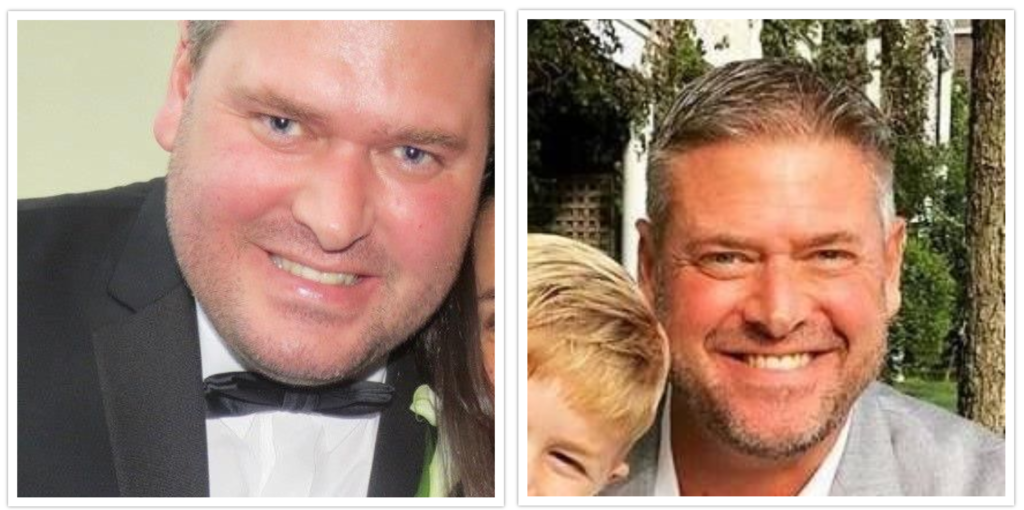
In my former life, I was an active alcoholic while dealing with different mental health issues over the past 20 years. Physically, mentally, and emotionally sick from overindulging in food and drink, I was clinically depressed with low energy and a "blah" mood all the time. There was no motivation to get off the couch, but I wasn't ready to admit I was an alcoholic.

By the end of 2013, I was 70 pounds overweight (morbidly obese), couldn’t do a push-up on my own, my blood pressure spiked, my liver was failing, and the cholesterol and fat in my arteries were near fatal levels. I started to have panic attacks in public, general anxiety, and deep depressions that lasted for weeks.  

Something had to change.... 

After another drunk night, I decided to go to detox/rehab for 30 days to clean up my life. After a few relapses and slips, I had my last drink (God-willing) on November 1, 2015. After about a year, my mental health had improved enough to begin to help other addicts with this horrific disease. 

In 2016, I decided to pursue a Master of Science in Health Promotion and Disease Prevention, so I could learn how to accurately educate and inform others about addiction.  This graduate degree changed the direction of my life forever. 

This addiction recovery content writing business is a labor of love. Every chance I get, I like helping people who are still suffering. Life doesn't have to be that way.

I'm not going to lie...this didn't happen overnight and there was no quick fix.  It was consistent and persistent small steps every day that improved my health over several years.  I discovered that changing one's life is hard work, but it's the best investment of time and energy someone will ever make.

You Are Not Alone

Struggling with your mental health is incredibly common in the United States. In fact, the National Alliance on Mental Illness (NAMI) estimates that one in every five American adults struggles with a mental health condition each year. And of those adults, only 40% receive treatment for their condition. There are many reasons why people don’t seek out or follow through with mental health treatment. Some people may not know they’re struggling with a mental health disorder. Others may not have access to quality mental health care or fear the stigma often associated with mental health problems.

Some Common Types of Therapies Used

Online Therapy

Anxiety Therapy

Depression Therapy

Work Stress Therapy

Burnout Therapy

IFS Therapy

PTSD Therapy

EMDR Therapy

DBT Therapy

Therapy for Young Adults

OCD Therapy

Eating Disorders

Anger Management Therapy

Polyvagal Therapy

Men’s Mental Health Counseling

Group Therapy

CBT Therapy

Resilience Therapy

Peak Performance Therapy

Life Transitions Counseling

ADHD Behavior Therapy

Grief Counseling

Porn Addiction Counseling

Social Anxiety Therapy

Couples Counseling

The Clinic

My experience allows me to offer effective outpatient, individualized, psychological care. I treat a number of mental health disorders, and provide a neutral ground to individuals, families, and couples.  I specialize in providing comprehensive outpatient mental health care and services to everyone regardless of race, creed, color, ethnicity, language, sexual identity/preference, gender, age, disability, or socio-economic status.

Treatment Focus

The focus is to help individuals heal, energize, and become aware of their inner strengths. I achieve this by providing a neutral safe space, listening to your concerns, and customizing a treatment plan.  A commitment and mission is to provide exceptional, quality, friendly, accessible and culturally responsive and prevention and intervention services to all people.

A Patient Promise

I promise to be there for you every step of your journey. The goal is to help you grow from your struggles, heal from your pain, and move forward to where you want to be in your life.  You don't have to struggle in silence.

We are committed to client centered practice in all of our services, striving to provide a seamless array of high quality assessment stabilization, treatment, and support services to adults.

Start Where You Are

I believe therapy should feel human, gentle, and safe. Not clinical or intimidating. My role is to offer a space where you can slow down, talk openly, and begin to understand yourself with more compassion.

Many of the people I work with are navigating busy lives, emotional exhaustion, identity changes, relationships, or the quiet feeling that something isn’t quite right. You don’t need to have a clear reason for coming to therapy. Curiosity is enough.

I work at a pace that feels right for you. There’s no pressure to perform, explain things perfectly, or make progress quickly. We start where you are.

How I Can Help

My approach to therapy is integrative, grounded primarily in Cognitive Behavioral Therapy (CBT), Motivational Interviewing, Trauma-Informed Care, and Person-Centered Therapy.

I understand emotional distress as something that develops through a combination of thought patterns, emotional experiences, behaviors, and life circumstances. Together, we work to make sense of these patterns—identifying what’s keeping you stuck and creating meaningful, realistic ways to move forward.

In our work, I may help you:

  • recognize and shift unhelpful thought patterns

  • build practical coping and regulation skills

  • explore deeper emotional experiences

  • strengthen motivation when change feels difficult or unclear

At the core of my approach is a strong therapeutic relationship. I aim to create a space where you feel genuinely understood, supported, and able to show up as you are—without judgment.

I also take a holistic, trauma-informed, and culturally responsive perspective, recognizing how your identity, environment, and lived experiences shape your mental health.

My goal is to help you build insight, feel more grounded and confident, and develop tools that support lasting change in your daily life.

A theoretical framework is essentially a research-backed “map” that guides how I understand your thoughts, emotions, and behaviors. It helps shape the direction of therapy so that what we’re doing has intention and purpose—not guesswork.

You can think of it as a lens I use to understand your experience. Just like a doctor relies on medical knowledge to understand physical symptoms, I draw from psychological theories to make sense of emotional patterns and help guide meaningful change.

Rather than using a one-size-fits-all approach, this framework allows me to choose tools and strategies that are tailored to you.

You might hear terms like counseling approach, therapeutic model, or conceptual framework—they all refer to the same idea.

It’s the foundation behind how I understand what you’re going through and how I decide what might actually help. It allows me to tailor therapy to you, so our work feels focused, relevant, and meaningful.

Reach Out - I’d Like to Hear From You!

If you’re considering therapy, you don’t need to be certain or ready to commit long-term.

A free consultation offers a chance to ask questions, get a feel for how I work, and see whether it feels like the right fit for you. You’re very welcome to reach out when it feels right.